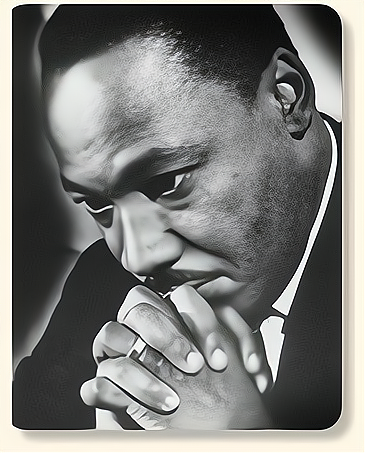
Martin Luther King Jr. (1929–1968)
Martin Luther King Jr.
One of the leading figures during the civil rights movement in the twentieth century was Martin Luther King, Jr. (1929–1968). He was an American clergyman, activist and prominent leader in the African-American civil rights movement, and raised public awareness of the movement partly by his oratorial skills.
In 1964 he received the Nobel Peace Prize for his work toward ending racial segregation and discrimination. As a result, many people came to see him "as a modern Moses," and he was known to use the Exodus story throughout his career.
In 1957, when he was 28 years of age, he gave a sermon in Montgomery, Alabama, entitled "The Birth of a New Nation," in which he used the "struggle of Moses" to symbolize the new civil rights struggle then taking place:
I want to preach this morning from the subject, 'The Birth of a New Nation.' . . . It is the story of the Exodus, the story of the flight of the Hebrew people from the bondage of Egypt, through the wilderness and finally, to the Promised Land. . . The struggle of Moses, the struggle of his devoted followers as they sought to get out of Egypt. This is something of the story of every people struggling for freedom.
Martin Luther King Jr. — Montgomery, Alabama, 1957 (King)"I've Been to the Mountaintop"
He continued to use the symbolism of the Exodus story up until his last speech in 1968, entitled "I've Been to the Mountaintop," delivered in Memphis, Tennessee, the night before he was assassinated:
And I've looked over. And I've seen the promised land. I may not get there with you. But I want you to know tonight, that we, as a people, will get to the promised land.
Martin Luther King Jr. — Memphis, Tennessee, April 3, 1968The Moses Symbol Endures
The use of the Moses and Exodus story throughout the civil rights movement was not limited to King. The call of "Let my people go!" — made famous by the spiritual "Go Down Moses" — had been a rallying cry for African-Americans since the era of slavery, and continued to resonate through the 1960s movement.
King's use of the Exodus narrative gave the civil rights struggle a moral and spiritual dimension that resonated with both Black and white Americans who shared a biblical heritage. By positioning civil rights activists as the new Children of Israel seeking their Promised Land, King tapped into one of the most powerful myths in American consciousness — a myth that had been present since the Pilgrims first set foot on American soil.
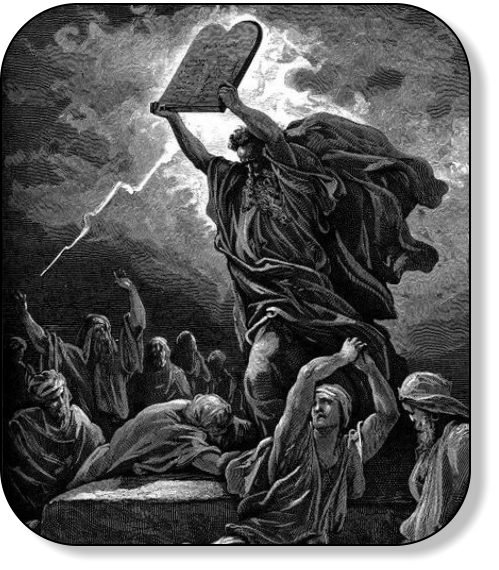
The Exodus narrative — central to American history