Pagans Who Praised Moses
Long before America's Founding Fathers drew on the Moses story, ancient Greek and Roman writers had already recognised Moses as a figure of extraordinary significance. Their references are remarkable given that these were pagan scholars writing from outside the Jewish tradition, yet they saw in Moses qualities of law, leadership, and divine wisdom that transcended any single nation or faith.
That men of the ancient world — historians, geographers, and literary critics shaped by Greek philosophy and Roman tradition — should write of Moses with such seriousness and admiration speaks to the universal power of his story. It also helps explain why, centuries later, America's own founders would reach for the same figure when seeking a model for their new republic.
Hecataeus of Abdera c. 360–290 BC — Greek Historian
Among the earliest Greek references to Moses is that of Hecataeus of Abdera, writing in the 4th century BC. He described Moses as a man "outstanding for his wisdom and courage," who led his people out of Egypt, founded cities, and established a comprehensive legal code. Hecataeus recorded that Moses "introduced a way of life" built not on military conquest alone but on a moral and legal system received from a single divine source — an observation that would later resonate deeply with Puritan settlers and American founders alike.
Hecataeus noted that Moses had "trained his people in the use of arms" while simultaneously creating institutions of governance centred on justice and law. His account, preserved in the writings of Diodorus Siculus, represents one of the most detailed treatments of Moses by any non-Jewish ancient writer.
Moses . . . outstanding for his wisdom and courage, founded cities and drew up laws for the people, dividing them into tribes and appointing priests to be the administrators of religious affairs and civil government.
Hecataeus of Abdera — as cited in Diodorus Siculus, Bibliotheca Historica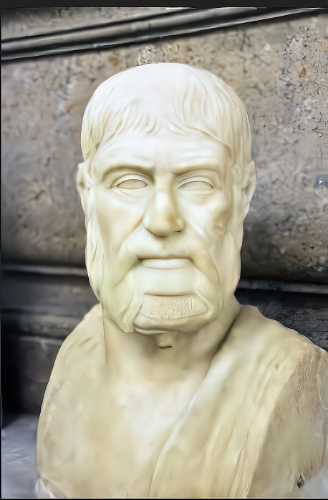
Hecataeus of Abdera — Greek historian, one of the earliest to write of Moses
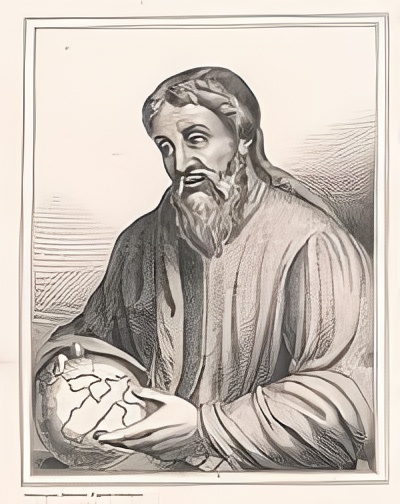
Strabo — Greek geographer and historian
Strabo 64 BC – 24 AD — Greek Geographer & Historian
The Greek geographer and historian Strabo devoted a substantial passage in his Geographica to Moses, describing him as an Egyptian priest who led his followers out of Egypt after rejecting the polytheism of his homeland. Strabo portrayed Moses as a leader of singular philosophical rationality — a man who taught that God was not to be represented by any image or idol, but was a universal and invisible presence encompassing all of creation.
What is striking about Strabo's account is its admiring tone. Writing for a Greek audience deeply familiar with their own philosophical traditions, he presented Moses as a thinker who had arrived at conclusions about the divine that Greek philosophy itself had been straining toward. He further noted that Moses "convinced not a few reasonable men" to follow him and that he established a society governed by law and reason rather than superstition.
Moses taught that God encompasses us all and the earth and sea — the thing which we call heaven, or universe, or the nature of all that exists . . . and that no one with any sense would dare to fashion an image of him.
Strabo — Geographica XVI.2Pompeius Trogus 1st century BC — Roman Historian
The Roman historian Pompeius Trogus, whose work survives through the summary of Justin, placed Moses within a lineage of wisdom going back to the patriarch Joseph. He described Moses as a man whose gifts of mind surpassed even his illustrious ancestry, and whose leadership established the foundations of an entire civilisation. Trogus was particularly impressed by Moses's capacity to combine religious, legal, and military authority in a single person — a quality that Romans, with their own tradition of great lawgivers, would have instinctively respected.
His account presents Moses not primarily as a religious figure but as a statesman and lawgiver of the first order — a framing that would prove enormously influential on later Western thinkers, including those who helped build the American republic.
Moses excelled his father in the brilliance of his mind . . . he took with him the sacred things of the Egyptians, which the Egyptians, attempting to recover by force of arms, were compelled by storms to return home.
Pompeius Trogus — as summarised by Justin, Epitome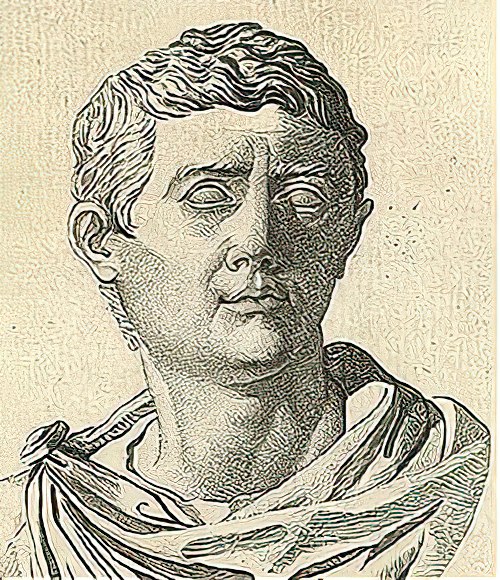
Pompeius Trogus — Roman historian
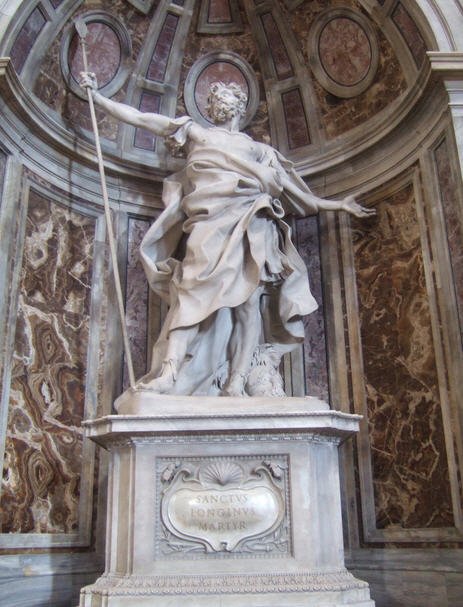
Longinus — Greek literary critic, author of On the Sublime
Longinus 1st century AD — Greek Literary Critic
Perhaps the most surprising classical reference to Moses comes from the Greek literary critic Longinus, whose celebrated treatise On the Sublime is one of the foundational texts of Western literary theory. Longinus was not writing a history or a theological treatise — he was making an aesthetic argument about what constitutes the highest form of literary expression. And for his supreme example, he chose Moses.
Citing the opening of Genesis, Longinus presented Moses as a master of the sublime — a writer who, with a single sentence, conveyed the infinite power of the divine. That a Greek critic, writing for a literary audience steeped in Homer and Plato, should reach for a Hebrew lawgiver as his prime example of literary greatness is a testament to the extraordinary reach of Moses's influence in the ancient world.
So too the lawgiver of the Jews — no ordinary man — having formed a worthy conception of divine power, gave expression to it at once in the opening of his Laws: "God said" — what? — "Let there be light, and there was light."
Longinus — On the Sublime, IX.9This passage from Longinus was widely quoted by Christian humanists during the Renaissance and Reformation, and contributed significantly to the intellectual prestige that Moses carried into the early modern period — the very period in which the Puritan settlers and the American Founding Fathers were shaped.
A Universal Figure
What unites these Greek and Roman accounts is not religious conviction but intellectual admiration. These writers were not Jews or Christians. They had no stake in validating the biblical narrative. Yet each of them, approaching Moses from the perspective of their own philosophical and literary traditions, found in him something that commanded respect: a thinker who combined law, reason, and divine authority into a coherent vision of human community.
It was this pre-existing classical reputation — as much as the biblical text itself — that made Moses such a natural touchstone for the educated men who founded the United States. When Jefferson, Adams, and Franklin reached for the image of Moses, they were drawing on a tradition of admiration that stretched back not just to the Hebrew Bible but to the libraries of ancient Greece and Rome.