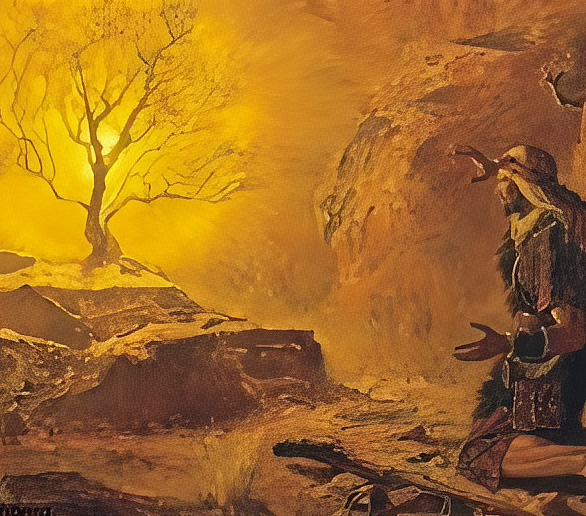
A Symbol Across the Centuries
Several political leaders in US history have used the symbolism of the biblical prophet Moses. The story of Moses gave meaning and hope to the lives of Pilgrims seeking religious and personal freedom, and later inspired America's founding fathers during the American Revolution.
The Moses story helped writers of the Declaration of Independence, followed by the Constitution. His story was referred to by Abraham Lincoln to help justify America's Civil War, and then by civil rights leaders.
Some scholars have claimed that the Ten Commandments is the basis of America's Constitution, with theologians like William Barclay proclaiming, "From Israel we Christian peoples inherit that wise and holy code of laws. Our society is founded upon it."
John Adams, America's 2nd president, compared Moses to the Greek philosophers: "As much as I love, esteem, and admire the Greeks, I believe the Hebrews have done more to enlighten and civilize the world. Moses did more than all their legislators and philosophers."
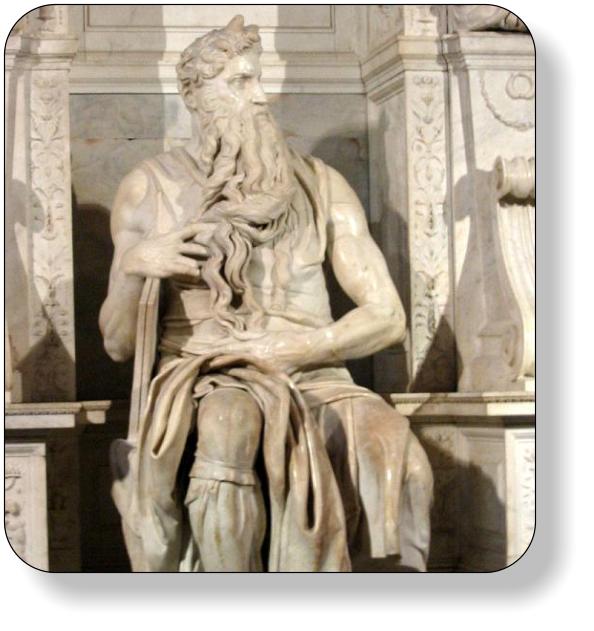
Michelangelo's Moses — San Pietro in Vincoli, Rome
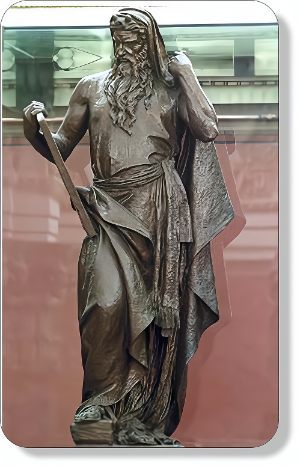
Moses statue — Library of Congress, Washington D.C.
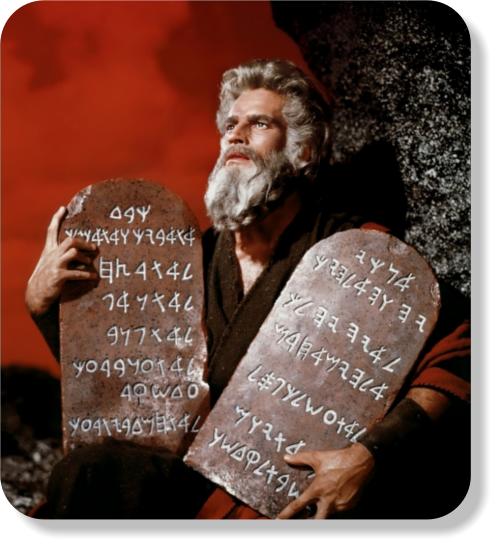
Charlton Heston as Moses — The Ten Commandments (1956)
Questions This Site Answers
Who chose the words on the Liberty Bell? Why did Benjamin Franklin and Thomas Jefferson propose a Great Seal showing the Exodus?
What American woman was called "Moses" — and why was she given that nickname? Did Moses help form democracy? Who first respected the principles of democratic liberty and stern justice in an age of despotism?
In popular culture, the 1956 film The Ten Commandments is said to parallel "the narrative of America's own nationhood under God." At the end of the film, the final pose of Moses, played by Charlton Heston, is said to mimic that of The Statue of Liberty.
Even the childhood of the comic book hero Superman is similar to that of Moses, who was also "set adrift to become his people's savior."
From Israel we Christian peoples inherit that wise and holy code of laws. Our society is founded upon it.
William Barclay — Theologian